

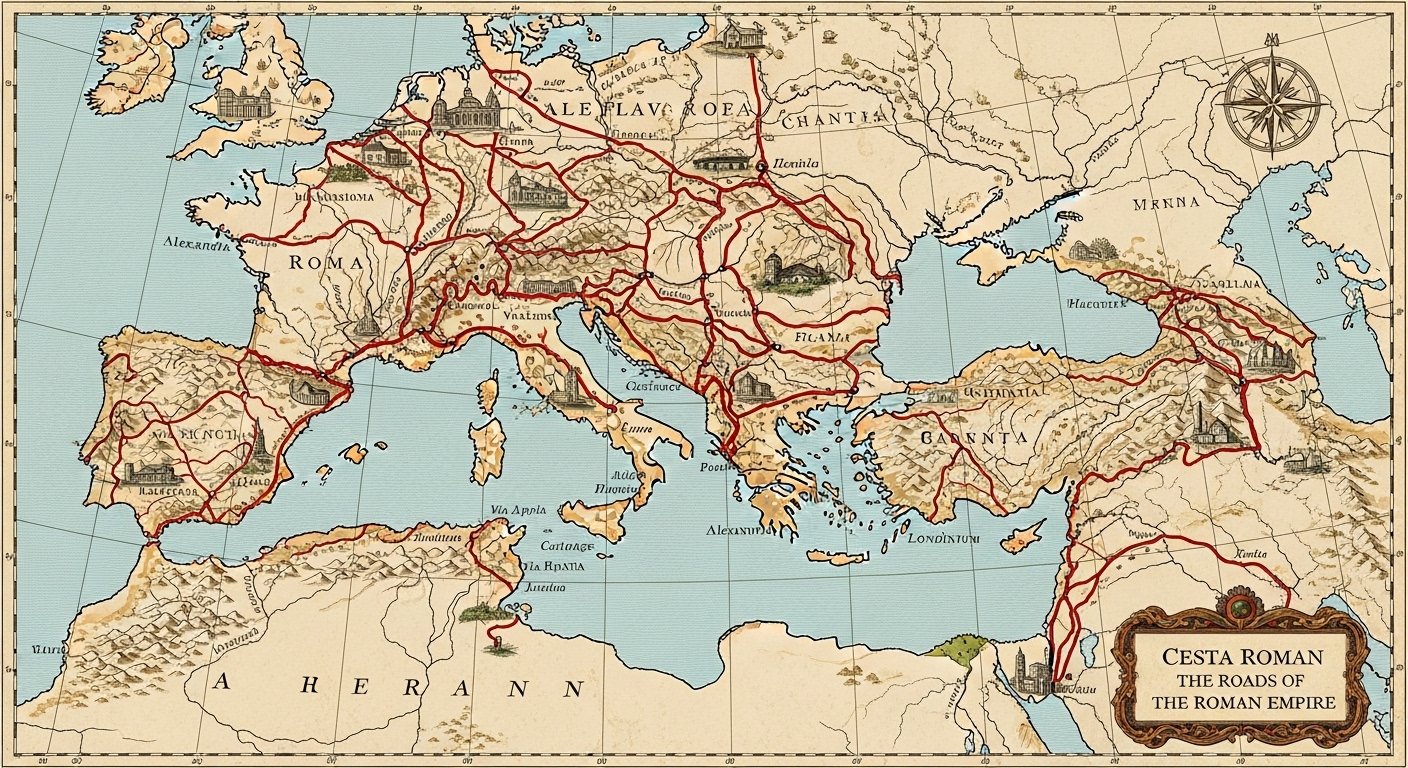
The ancient Roman road system, known as Cesta Roman, stands as one of history’s most remarkable feats of engineering and infrastructure. Constructed over centuries, these roads connected the vast expanse of the Roman Empire, facilitating trade, military movements, cultural exchange, and administrative control. Their enduring impact can still be traced in modern road networks across Europe, the Middle East, and North Africa. Understanding the Cesta Roman provides insight into Rome’s organizational prowess, engineering innovation, and its enduring influence on civilization.
1. Historical Background of Roman Roads
The origins of the Roman road network date back to the early Roman Republic (around 500 BCE). Initially designed for military purposes, roads enabled rapid troop movements, ensuring that Roman legions could respond swiftly to threats within and beyond the empire’s borders. Early roads were simple tracks, but as Rome expanded, the need for durable, reliable, and extensive routes grew.
By the time of the late Republic and early Empire (1st century BCE – 2nd century CE), the Romans had developed sophisticated road-building techniques. The famous phrase “All roads lead to Rome” reflects the centrality of Rome in the network and the strategic design aimed at connecting provincial territories to the capital. Roads served multiple purposes: military, economic, administrative, and cultural, highlighting their multifaceted role in consolidating Roman power.
2. Engineering and Construction Techniques
The construction of Cesta Roman roads exemplifies Roman engineering expertise. Roman engineers, or agrimensores, followed a meticulous approach to ensure durability and efficiency. A standard Roman road typically included several layers:
-
Statumen: The foundation layer of large stones to stabilize the road.
-
Rudus: A secondary layer of smaller stones mixed with lime, providing structural support.
-
Nucleus: A compacted layer of fine gravel or sand for even surface leveling.
-
Summa Crusta (Pavimentum): The top layer, often made of large polygonal stones, carefully fitted together to create a smooth, durable surface.
Roads were often cambered, with a slight arch to allow water drainage, preventing erosion. Ditches and curbs further facilitated proper runoff. Roman roads were designed to last centuries, and many modern roads still follow ancient routes.
3. Key Roman Roads
Several Roman roads are particularly noteworthy due to their historical significance:
-
Via Appia (Appian Way): Known as the “Queen of Roads,” it connected Rome to Capua and later extended to Brindisi. Constructed in 312 BCE, it became a vital trade and military route.
-
Via Aurelia: Running along the Tyrrhenian coast to Gaul, it facilitated commerce and coastal defense.
-
Via Flaminia: Linking Rome to the Adriatic coast, it was essential for military and administrative communication.
-
Via Egnatia: Extended through the Balkans, connecting the Adriatic Sea to Byzantium, serving as a key east-west corridor.
These roads illustrate the strategic planning behind Cesta Roman, linking not only military outposts but also economic hubs and provincial capitals.
4. Military Significance
The primary motivation for building Roman roads was military efficiency. Rome’s legions could move quickly across the empire, often covering 20-30 miles per day on well-constructed roads. Fortifications, watchtowers, and mile markers complemented road construction, enabling rapid communication and deployment.
Efficient roads allowed for coordinated campaigns, such as Julius Caesar’s movements in Gaul or the defense against Germanic tribes along the Rhine and Danube. Roads also facilitated supply lines, crucial for sustaining armies in distant provinces.
5. Economic Impact
Roman roads were essential for commerce and trade. Merchants transported goods such as grain, wine, olive oil, metals, and textiles across provinces efficiently. Markets flourished along road networks, stimulating urban growth and regional integration.
Tolls and road stations (mansiones) supported travelers and ensured maintenance. Local economies benefited from road accessibility, linking rural areas with urban centers. This connectivity was a major factor in the economic cohesion of the Roman Empire, allowing it to sustain prosperity for centuries.
6. Administrative and Cultural Role
Beyond military and economic uses, Roman roads were crucial for governance and cultural integration. Provincial governors and officials relied on the roads to conduct inspections, collect taxes, and implement imperial decrees. Messages and reports could traverse hundreds of miles with remarkable speed, aided by courier systems (cursus publicus).
Culturally, the roads facilitated the spread of Roman law, language, architecture, and urban planning. Cities developed along major routes, blending local traditions with Roman influence. Over time, the road system helped create a shared Roman identity across diverse territories.
7. Road Maintenance and Management
Maintaining the Cesta Roman was as important as building it. Roads required constant upkeep due to wear from traffic, weather, and natural events. The responsibility often fell to local municipalities, private contractors, or military units stationed nearby. Funding came from taxes, tolls, and imperial resources.
Milestones and road inscriptions provided information about distances, builders, and repair work, reflecting Rome’s meticulous approach to infrastructure management.
8. Legacy and Influence on Modern Infrastructure
The influence of Roman roads extends far beyond antiquity. Many modern European highways follow routes established by Roman engineers. Urban planning, road construction techniques, and the principle of connecting strategic points owe much to the Roman model.
Examples include the Appian Way’s remnants in Italy, sections of Via Egnatia in the Balkans, and urban layouts in France and Spain that mirror ancient routes. The concept of durable, well-engineered, and strategically planned roads continues to inspire modern civil engineering.
9. Archaeological Discoveries and Preservation
Archaeologists have uncovered extensive remains of Roman roads, revealing insights into ancient engineering and daily life. Excavations often reveal road layers, milestones, bridges, and associated infrastructure like inns and rest stations.
Preservation efforts are ongoing, balancing historical protection with tourism and modern development. Sites like the Via Appia Antica in Rome attract millions of visitors, offering a tangible connection to the ancient world.
10. Conclusion
The Cesta Roman system epitomizes Rome’s ingenuity, ambition, and organizational skill. Its roads were more than mere paths; they were arteries of military power, economic activity, administrative efficiency, and cultural exchange. The durability of Roman construction and the strategic foresight behind their network allowed the empire to flourish and leave a lasting legacy.
Today, Roman roads continue to inspire engineers, historians, and travelers alike, serving as a testament to the enduring genius of ancient Rome. By studying and preserving these roads, we not only honor the past but also gain insights that remain relevant in modern infrastructure, urban planning, and societal connectivity.